






Table of Contents
- What Is Brazil RoHS?
- Regulated Substances Under Brazil RoHS
- Brazil RoHS Compliance Timelines: What You Need to Prepare For
- Brazil RoHS Labeling & Documentation Requirements
- Brazil RoHS Market Surveillance and Enforcement
- Brazil RoHS Key Takeaways for Manufacturers & Importers
- Get Ahead with Acquis RoHS Compliance Automation
Brazil’s electronics industry is on the brink of a regulatory shift — and if you're still assuming RoHS is just a European affair, think again.
The Brazilian National Council for the Environment (CONAMA) has released a draft resolution that mirrors the EU RoHS but with local twists. It’s called the Restriction of Hazardous Substances (RoHS) for Electrical and Electronic Equipment, and it sets out to limit 10 substances across a wide range of products.
Here’s the breakdown every manufacturer, importer, and compliance officer needs to understand — before enforcement becomes reality.
What Is Brazil RoHS?
Brazil RoHS is a draft technical regulation designed to control the use of hazardous substances in electrical and electronic equipment (EEE). It aligns with the EU RoHS Directive but includes region-specific timelines, obligations, and exemptions.
This draft is under final review — but its core structure is unlikely to change.
Regulated Substances Under Brazil RoHS
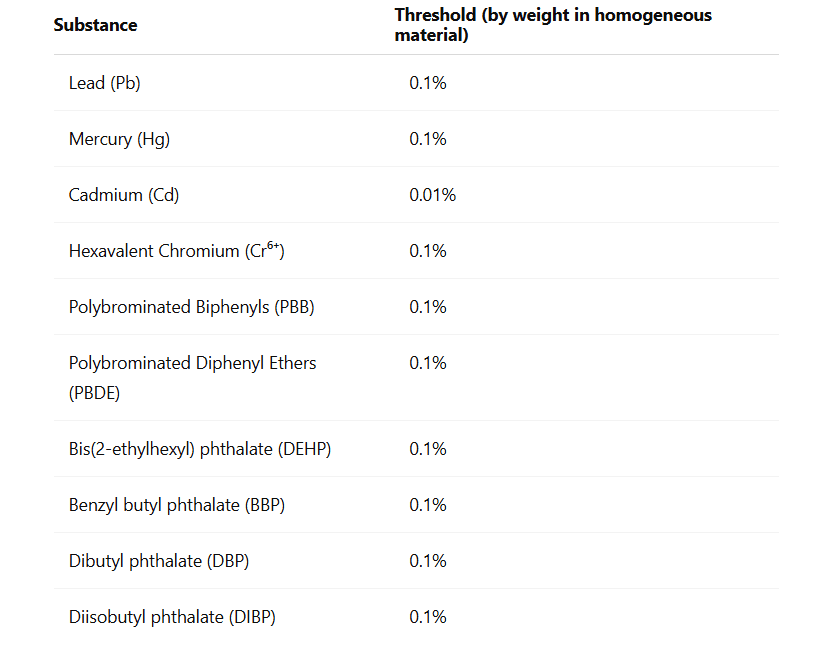
Brazil’s draft RoHS regulation restricts the following 10 hazardous substances, consistent with EU thresholds:
Brazil RoHS Compliance Timelines: What You Need to Prepare For
- Mercury: Already restricted under existing Brazilian lighting laws (since 2020)
- PBB and PBDE: Banned immediately upon final publication of the new RoHS resolution
- All Other Substances: Grace period of 4–7 years, depending on product category (to be defined in annexes)
Implementation schedules will be defined per product type in upcoming resolutions — monitor CONAMA and INMETRO channels closely.
Regional substance restrictions are easier to manage with RoHS compliance software that helps centralize supplier data, product information, and compliance tracking.
Brazil RoHS Labeling & Documentation Requirements
Companies will need to:
- Affix proper hazardous substance labeling on packaging and products
- Issue a Declaration of Conformity (DoC) per Article 12
Your technical documentation should include:
- Product descriptions and model identifiers
- Full Bill of Materials (BoM)
- Lab test reports or supplier declarations of conformity
- Risk assessments for restricted substances
- Conformity statements aligned with the Declaration of Conformity (DoC)
Retention: These records must be kept for at least 5 years after the product is placed on the market.
Brazil RoHS Market Surveillance and Enforcement
Enforcement will be led by:
- IBAMA (Brazilian Institute of Environment and Renewable Natural Resources)
- State environmental agencies acting under national environmental law
Violations may lead to:
- Monetary fines
- Product withdrawal or import bans
- Public recalls
- Criminal liability in cases of environmental harm or falsified documentation
Brazil RoHS Key Takeaways for Manufacturers & Importers
- Don’t underestimate Brazil RoHS just because it’s in draft form — it will become enforceable.
- Align your substance controls with EU RoHS best practices today.
- Start compiling a centralized technical documentation library for your affected SKUs.
- Automate compliance tracking across suppliers to reduce risk.
Get Ahead with Acquis RoHS Compliance Automation
Acquis helps manufacturers and importers eliminate compliance uncertainty.
Automated supplier outreach & data collection Real-time tracking of hazardous substance levels Brazil-ready declaration & documentation workflows AI-powered alerts for updates & deadlines
Book a demo today and see how Acquis keeps you audit-ready across every market — Brazil included.
Disclaimer: Final legislative publication is pending and may alter compliance deadlines.