
Key Capabilities

- 1List governance: versions, effective dates, thresholds, synonyms, CAS/EC/MI mappings
- 2Supplier intake: declarations, SDS, test reports with validations and expiries
- 3chemSHERPA: field mapping, import/export, picklist normalization
- 4Custom DSL: build your own list (e.g., brand blacklists, OEM adders) with approvals
- 5Roll-ups & reporting: part→assembly→product aggregation, customer pack generation
- 6Change monitoring: prompts when lists update or evidence expires
How It Works

Ingest standard lists and your custom DSL with IDs and thresholds.

Collect supplier evidence; validate identifiers, units and dates.

Run list checks and conversions (chemSHERPA, CSV, customer templates).

Aggregate to product/customer packs; route approvals and publish.

Monitor updates and re-collect where required; maintain an audit trail.
Free Resource: Multi-List Substance Ops Playbook
Includes governance patterns for AD-DSL, chemSHERPA mapping tips, and a template to build your own DSL.
Download E-Book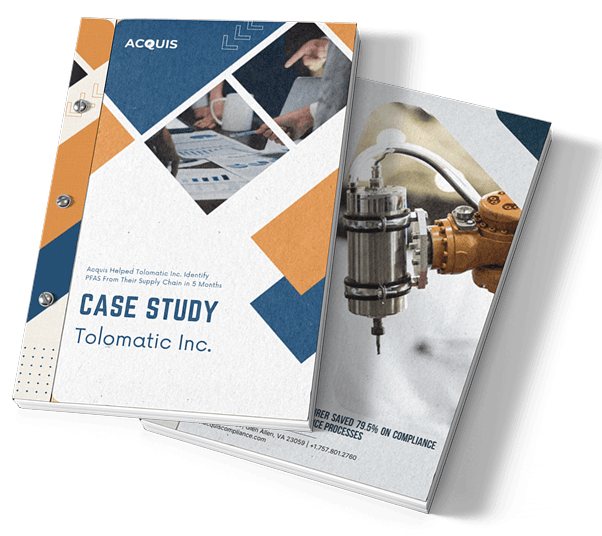
Operational Benefits

One governed source of truth across multiple lists and customers

Cleaner data with identifier/threshold validations and expiries

Faster customer responses with pre-mapped export templates

Defensible evidence trail tied to each declaration and report
Implementation, Advisory & Managed Service

Implementation (3–6 weeks)
- List ingestion & schema mapping (AD-DSL, chemSHERPA, custom DSL)
- Supplier intake flows & SLAs
- Export templates (chemSHERPA/CSV/customer packs)
- Training for sourcing, engineering, compliance
Outcome:
Live hub; first multi-list customer pack delivered.

Advisory (Quarterly)
- Threshold policy & exception handling
- Evidence QA & remediation plans
- Executive readouts & roadmap guidance
Outcome:
Fewer escalations; cleaner customer audits.

Managed Service (MSP)
- Supplier outreach/validation at scale
- List updates and re-declaration cycles
- Customer pack generation & responses
- SLA: initial triage in 2 business days
Outcome:
Stable operations without extra headcount.
Resticted Substances Regulations: Manual vs Software
| Process Area | Manual (Spreadsheets) | Software (Regilient) |
|---|---|---|
| Version Control | Files everywhere; unknown list versions | Governed lists with effective dates |
| Supplier Intake | Attachments; missing fields | Validated forms; expiries & SLAs |
| chemSHERPA | Hand mapping; errors | Schema mapping & exports |
| Custom DSL | Hard to maintain | No-code list builder with approvals |
| Audit Trail | Scattered emails | Versioned records & sign-offs |
Typical Roles & Actions
| Role | Typical Actions (examples) |
|---|---|
| Sourcing | Request declarations/SDS; drive SLAs; close gaps |
| Engineering | Map parts/BOMs; assess substitutions when hits occur |
| Compliance/Quality | Approve lists & reports; manage audits |
Customer-specific demands vary. Build once; export in their format. That’s the only scalable way.
Substance Lists Checklist
- Load standard+custom lists with versioning and thresholds
- Stand up supplier intake with validations/expiries
- Map parts/BOMs and run roll-ups
- Publish exports (chemSHERPA/CSV/customer packs)
- Monitor updates and re-collect evidence on cadence
FAQs for restricted substances regulations
Explore Our Resources


Related Compliance Solutions
Make Multi-List Substance Compliance Repeatable
Centralize lists, evidence, conversions and reporting with Regilient, no more stale declarations or last-minute scrambles.