Key Capabilities

- 1PFAS Identification and Tracking
- 2Compliance Documentation and Reporting
- 3Real-Time Regulatory Monitoring
- 4Regulatory Expert Guidance and Consulting
- 5Integration with Internal Systems
How It Works

Scope entities, years, PFAS definitions applicable to your portfolio.

Collect and validate supplier data for articles, materials, and mixtures.

Identify PFAS risks, detect compliance gaps, and suggest corrective actions for remediation.

Customer & Regulatory PFAS reporting support.

Ongoing Compliance Monitoring.
Free Resource: Expert Guidance on TSCA Section 8(a)(7)
Learn how to prepare for PFAS reporting under TSCA Section 8(a)(7). This guide explains reporting scope, historical data requirements, supply chain information collection, and record-keeping practices to support EPA PFAS compliance.
Download E-Book
Operational Benefits

Automate PFAS data collection across suppliers, materials, and product portfolios.

Centralize PFAS compliance data and documentation for easier tracking and audits.

Improve supply chain visibility to identify PFAS risks across components and materials.

Streamline PFAS reporting workflows and reduce manual compliance effort.

Enable faster decision-making with real-time PFAS risk insights and compliance dashboards.
PFAS Support Services

Implementation (4–8 weeks)
- Identifying & importing In-scope items
- Supplier request templates & workflows
- PFAS Fields & Declaration alignment
- Campaign manager setup
- Tool training & on-boarding

Advisory
- Eligibility & scoping decisions
- Regulatory consulting & training
- Suggestion for remediation (CAPA)
- Submission readiness reviews

Managed Service
- Supplier outreach & validation
- Ongoing list updates and dataset maintenance
- Risk Analysis
- PFAS Reporting Support
- Audit pack preparation
- SLA: initial triage in 2 business days
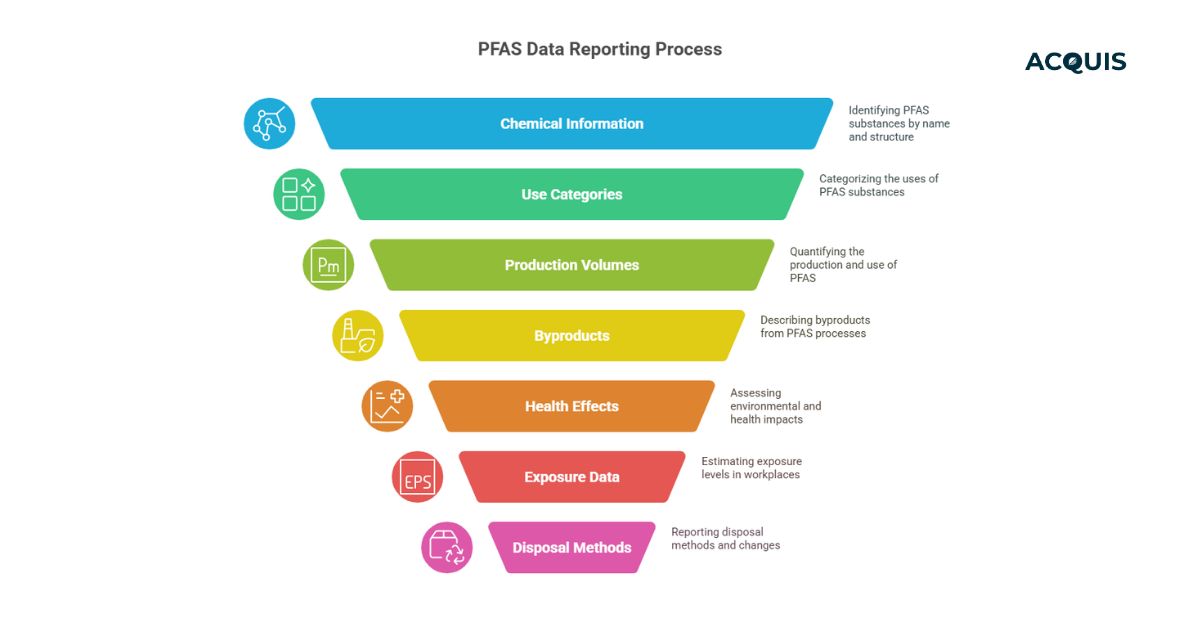
Typical PFAS Data Elements (High-Level)
| Role | Typical Actions (examples) |
|---|---|
| PFAS Identity | Trade/common name, CASRN/structure as available |
| Activity & Use | Manufacture/import year(s); categories of use |
| Quantities | Volumes manufactured/imported |
| Byproducts/Disposal | Byproduct formation; disposal methods |
Always consult 40 CFR Part 705 and EPA’s instructions for TSCA 8(a)(7) current fields and timelines.