






Table of Contents
- Overview of EU Battery Regulation
- Regulation Now Enforceable as of 18 August 2025
- Key Features of the EU Battery Regulation
- Key Requirements for Battery Manufacturers
- EU Battery Regulation Implications for Manufacturers and Importers
- EU Battery Regulation Diverse Battery Categories
- Enforcement Update: What Changes on 18 August 2025
- A Glimpse into Battery Passports under EU Battery Regulation
- Navigating Supply Chain Due Diligence for EU Battery Regulation
- Effective Dates and Exemptions of EU Battery Regulation
- Conclusion
As the global demand for batteries escalates, driven by advancements in technology and the transition to renewable energy, the European Union has taken decisive steps to ensure that the lifecycle of batteries aligns with stringent environmental, safety, and performance standards. The newly enacted EU Battery Regulation 2023/1542, introduces a comprehensive framework that all battery manufacturers and importers within the EU must navigate.
Overview of EU Battery Regulation
The EU BATR, effective from 2023, applies uniformly across all 27 EU member states, targeting every category of batteries from those used in household electronics to industrial applications, including vehicles and light transport. It replaces earlier directives and introduces enhanced measures aimed at promoting sustainability, increasing transparency, and strengthening compliance mechanisms.
Regulation Now Enforceable as of 18 August 2025
As of 18 August 2025, key provisions of the EU Battery Regulation 2023/1542 are now fully enforceable across the EU. This includes:
- Activation of the new battery categories (5-type classification)
- Stiftung EAR registration revocations for non-compliant foreign producers in Germany
- Enforcement of EPR obligations, labeling, and supply chain due diligence
- Country-specific rollout statuses (Germany, Denmark, France, etc.)
Key Features of the EU Battery Regulation
- Substance Restrictions:
A cornerstone of the EU Battery Regulation is its stringent control over the use of hazardous substances: Cadmium, Lead, and Mercury: Batteries containing more than 0.2% cadmium or more than 0.4% lead must be labeled with their respective chemical symbols. The regulation continues to enforce the prohibition of mercury in batteries, except under specific exemptions. Stabilizing Restrictions: The regulation keeps the permissible levels of cadmium and mercury stable and introduces a new threshold for lead content, restricting it to a maximum of 0.1% by weight.
- Labeling Requirements under EU Battery Regulation:
The regulation mandates extensive labeling to enhance user awareness and facilitate proper disposal:
- Separate Collection Symbols: By August 18, 2025, batteries must feature a symbol indicating the need for a separate collection, akin to the symbol used under the WEEE Directive.
- Comprehensive Battery Labeling: From August 18, 2026, all batteries need to display the "C" marking along with detailed information including manufacturer details, battery category, date of manufacture, weight, capacity, and hazardous materials present.
- Non-rechargeable Batteries: Specific labels for non-rechargeable batteries will include a non-rechargeable tag and expected lifespan information when used in typical applications.
- Digital Product Passports and QR Codes:
The EU Battery Regulation innovatively introduces digital product passports to increase transparency:
- Implementation by 2027: Batteries must come with a QR code that provides access to a digital product passport, detailing extensive information such as the CO2 footprint, manufacturer data, and material composition.
- Recycled Material Content: Information on the concentration of critical and recycled materials like cobalt, lithium, and nickel will also be available, fostering a circular economy approach
- Extended Producer Responsibility (EPR):
The concept of extended producer responsibility for batteries is not new, and it's a concept that's been reinforced by the EU Battery Regulation. Companies that initially introduce batteries to the market in an EU member state bear the responsibility for collecting and treating these batteries at the end of their life cycle within the same member state. The new EU regulation establishes updated targets for collection rates and recycling efficiencies, with the aim of enhancing the collection and recycling of batteries. These obligations are set to commence on August 18, 2025.
The EU Battery Regulation enforces an extended producer responsibility scheme:
- Financing Recycling Programs: Producers are obligated to finance the collection, treatment, and recycling of waste batteries.
- Annual Reporting Requirements: Manufacturers and importers must annually report the quantities of batteries placed on the market, ensuring compliance with recycling quotas.
- Uniform Application Across the EU:
As a regulation, the EU Battery Regulation is directly enforceable across all member states, ensuring consistent implementation without national deviations.
Key Requirements for Battery Manufacturers
The Regulation ushers in a series of pivotal changes, including new requirements for CE conformity evaluation of batteries. These changes will have far-reaching implications for battery manufacturers and the industry as a whole. Here are the key takeaways:
- CE Marking Compliance
Starting on August 18, 2024, all batteries, whether integrated into a product or supplied separately, must bear the CE marking in accordance with the new standard. Initially, this marking will not include criteria for carbon footprint and recyclable material, but these elements will be integrated at a later stage.
- CE Compliance Assessment
The responsibility for ensuring CE compliance assessment primarily rests with battery manufacturers. They must consider various factors aligned with the intended use of the battery, ensuring that safety and sustainability are paramount.
EU Battery Regulation Implications for Manufacturers and Importers
The EU Battery Regulation brings several implications for businesses involved in the battery market within the EU:
- Compliance is Mandatory: Non-compliance can lead to fines, shipping delays, and other regulatory repercussions.
- Increased Costs: Adhering to the new rules may increase operational and production costs due to the need for new labeling systems, compliance checks, and adjustments in material use.
- Supply Chain Adjustments: Manufacturers might need to alter their supply chains to source materials that comply with the new restrictions.
- Consumer Transparency: The regulation enhances consumer rights to information, enabling better decision-making based on environmental and safety factors.
EU Battery Regulation Diverse Battery Categories
The EU Battery Regulation 2023/1542 classifies batteries into five distinct categories:
- Portable batteries
- Light means of transport (LMT) batteries
- Starting, lighting, and ignition (SLI) batteries
- Industrial batteries
- Electric vehicle (EV) batteries
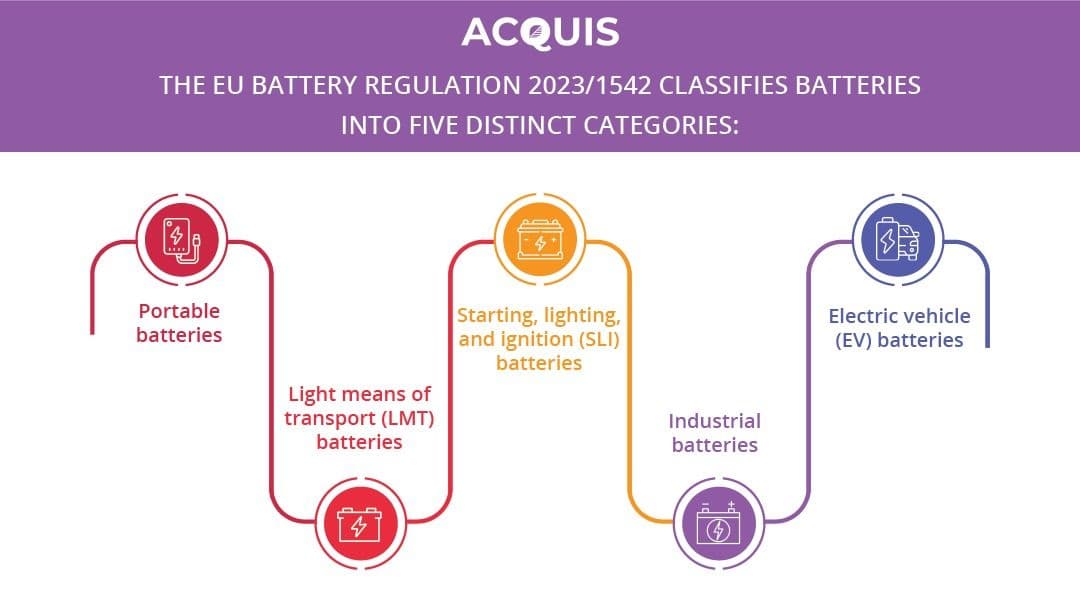
This categorization is pivotal in ensuring tailored regulations and standards for each type, reflecting their unique characteristics and applications.
Enforcement Update: What Changes on 18 August 2025
Paste the full update content I wrote above here. This keeps it in context, right after the battery categories and before diving deeper into passports and due diligence.
A Glimpse into Battery Passports under EU Battery Regulation
One of the standout features of this regulation is the introduction of electronic battery passports. These passports are mandatory for specific battery types, including:
- Industrial batteries with a capacity exceeding 2 kWh
- EV batteries
- LMT batteries (e.g., e-bike batteries)
The battery passport is a comprehensive document containing crucial information such as the manufacturer's name, the geographical location of the battery manufacturing facility, and detailed battery specifications. It serves a fundamental purpose: to enhance transparency throughout the supply and value chains, benefiting all stakeholders involved. Access to this electronic passport is facilitated through a QR code attached to the battery, and it becomes a mandatory requirement as of February 18, 2027. Battery manufacturers bear the responsibility for creating and maintaining these passports.
Navigating Supply Chain Due Diligence for EU Battery Regulation
The EU Battery Regulation 2023/1542 introduces supply chain due diligence requirements for companies, particularly battery manufacturers and importers, who are the first to introduce batteries to the EU market. This obligation applies when the active materials within the battery include cobalt, natural graphite, lithium, or nickel. Here are the essential aspects:
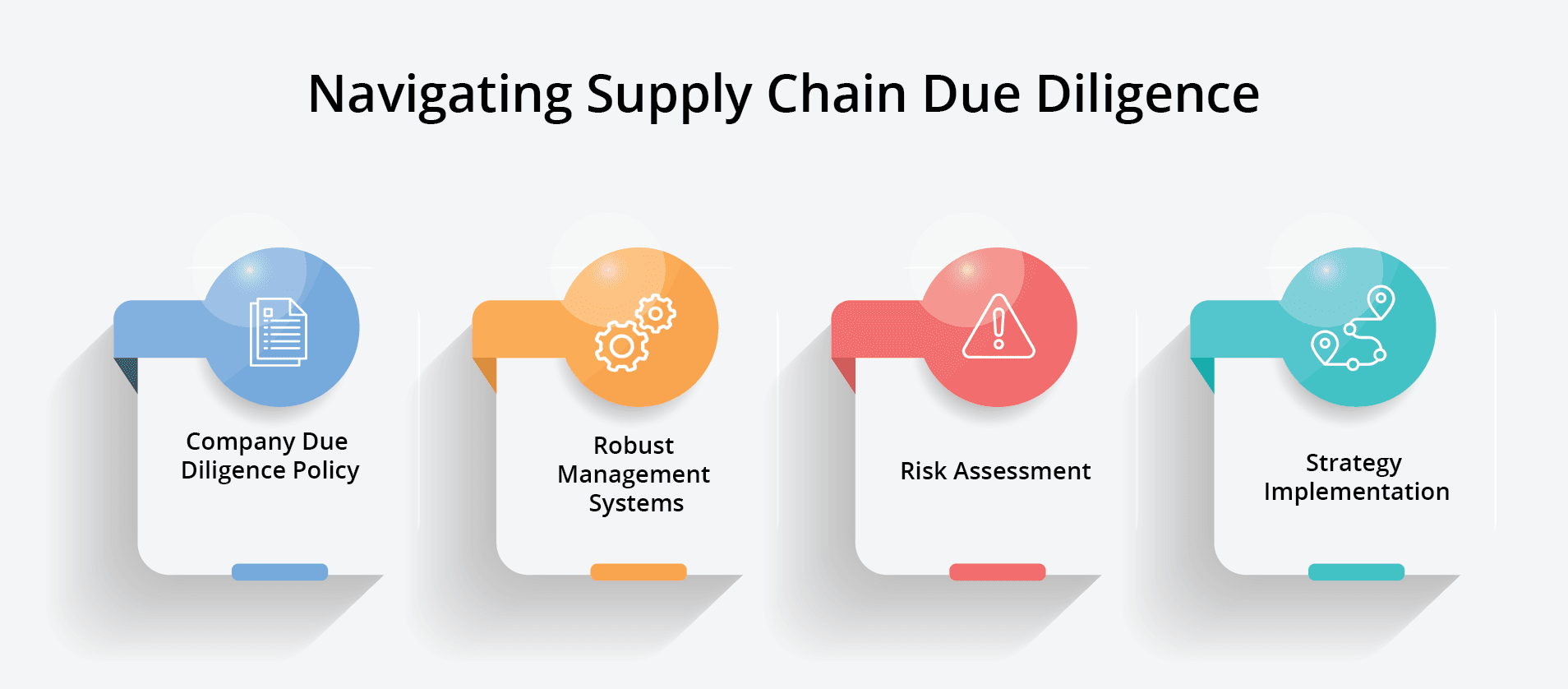
- Company Due Diligence Policy: Companies subject to the regulation must establish and communicate a specific due diligence policy for batteries, outlining their commitment to safety and sustainability.
- Robust Management Systems: To support the due diligence policy, these companies must implement robust management systems that ensure the policy's effectiveness.
- Risk Assessment: Identifying and assessing risks within the upstream supply chain is a critical step. Companies must meticulously evaluate potential hazards associated with their supply chains.
- Strategy Implementation: A comprehensive strategy must be developed and put into action to address the identified risks effectively. This strategic approach will ensure that the supply chain remains secure and sustainable.
- Third-Party Validation
The EU Battery Regulation 2023/1542 takes a stringent stance on compliance. It mandates third-party verification, carried out by a notified body, to assess and verify the effectiveness of due diligence policies and their integration into the company's management system.
Effective Dates and Exemptions of EU Battery Regulation
The supply chain due diligence obligation takes effect on August 18, 2025. However, companies with a net turnover of less than 40 million EUR, and those not part of a group exceeding this limit on a consolidated basis, are exempted from this obligation.
Conclusion
The EU Battery Regulation is a transformative step towards sustainable battery production and disposal. For manufacturers and importers, understanding and integrating these new requirements into their business strategies is crucial. Compliance not only mitigates legal risks but also positions companies as responsible participants in the global transition to a more sustainable and circular economy.
Stay ahead of regulatory changes and embrace sustainable practices. Consult Acquis compliance experts to ensure your business thrives in a greener future.