






Table of Contents
- What Is EAEU RoHS (TR CU 037/2016)?
- Scope: What Products Are Covered?
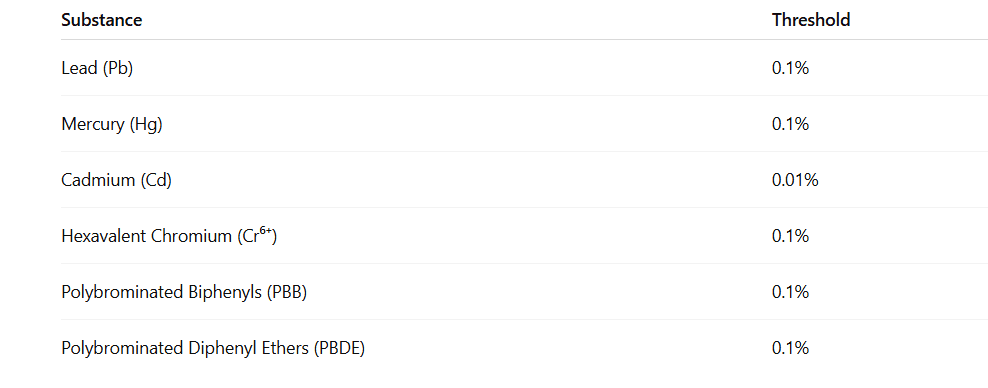
- Restricted Substances (by Homogeneous Material)
- EAC Mark = Proof of Compliance
- EAEU RoHS Documentation: What You Need
- EAEU RoHS Certification Pathways: 2 Options
- Option A: Self-Declaration (via local representative)
- Option B: Certification via Third-Party Lab
- Published in the EAEU Database
- EAEU RoHS Enforcement & Penalties
- How it's enforced:
- What happens if you fail EAEU RoHS:
- Who's Responsible for EAEU RoHS?
- Final Word: Don’t Wing EAEU RoHS
If you’re selling electronics in Russia, Kazakhstan, Belarus, Armenia, or Kyrgyzstan, you need more than just CE marks — you need EAC compliance under TR CU 037/2016 (aka EAEU RoHS).
Let’s break it down — no fluff, just what matters.
What Is EAEU RoHS (TR CU 037/2016)?
EAEU RoHS is the Eurasian equivalent of EU RoHS, restricting hazardous substances in electrical and radio-electronic equipment. It came into force on March 1, 2020.
> It’s also called Russia RoHS or EurAsia RoHS — but the regulation is officially known as TR CU 037/2016.
If you’re not compliant, you can’t sell your product legally in the EAEU market.
Scope: What Products Are Covered?
EAEU RoHS applies to 12 categories of products:
- Household appliances
- Personal computers & accessories
- Telecommunications equipment
- Lighting & office electronics
- IT & network devices
- Power tools
- Leisure & sports electronics
- Vending machines & gaming terminals
- POS/cash management systems
- Fire alarms
- Circuit protection (RCDs)
- Cable products
> ⚠️ Products not covered: military, aerospace, temporary R\&D equipment, and devices under other technical regulations.
Restricted Substances (by Homogeneous Material)
EAC Mark = Proof of Compliance
You’ll need to affix the EAC mark (Eurasian Conformity Mark) on every product that meets RoHS and other EAEU technical regulations.
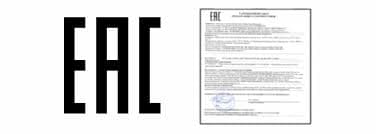
No EAC = No customs clearance. Period.
Multi-country substance compliance becomes more manageable with RoHS compliance software that helps track changing regional requirements.
EAEU RoHS Documentation: What You Need
To get EAEU RoHS certified, you’ll need:
- RoHS test report (can be EU-based, but must be accepted by EAEU CBs)
- Declaration of Conformity (DoC) – signed by a local rep
- Bill of materials (BOM)
- ISO 9001 certificate (if available)
- User manual in Russian
- Risk assessment per IEC 63000
> All of this must be stored in a technical file, valid for up to 5 years.
EAEU RoHS Certification Pathways: 2 Options
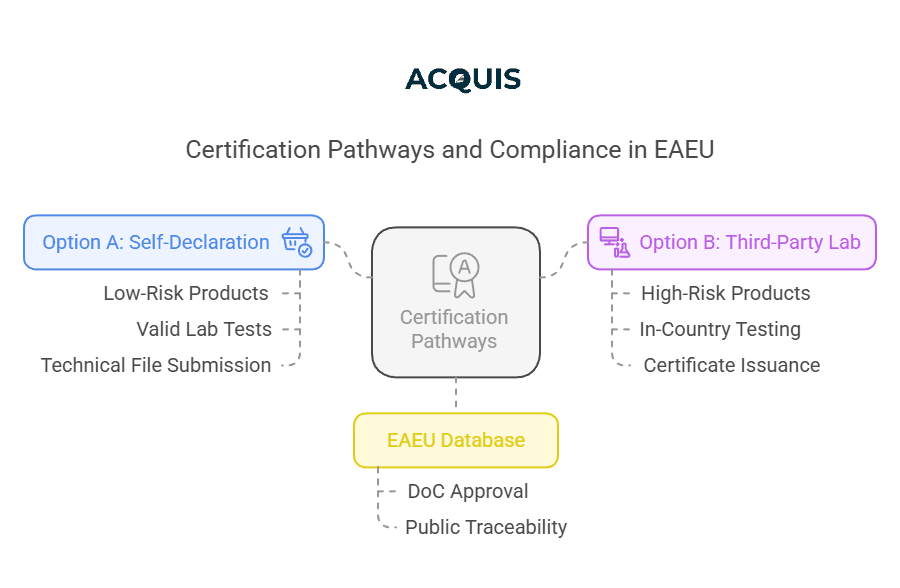
Option A: Self-Declaration (via local representative)
- Low-risk products
- Valid in-country RoHS lab tests or accepted EU tests
- Submit technical file and DoC to an accredited body
Option B: Certification via Third-Party Lab
- High-risk or complex products
- Requires in-country testing
- Certificate issued after inspection + technical doc review
Published in the EAEU Database
Once your DoC is approved, it’s published in the EAEU conformity database — making your compliance public and traceable to authorities, customs officers, and customers.
EAEU RoHS Enforcement & Penalties
How it's enforced:
- Market surveillance by member states
- Customs inspections on import
- Random product testing
- Verification of EAC mark and registered DoC
What happens if you fail EAEU RoHS:
- Product seizure or bans
- Border rejection
- Fines
- Brand blacklisting
Who's Responsible for EAEU RoHS?
- Manufacturers: Must prove conformity, prepare documentation, and apply the EAC mark.
- Importers: Must ensure imported products are compliant and registered.
- Local Representatives: Required to sign the DoC if the manufacturer is outside the EAEU.
Final Word: Don’t Wing EAEU RoHS
The EAEU isn’t just mirroring EU RoHS. It’s building its own system — and if you don’t adapt, you’re off the shelves.
Transparency, documentation, and local partnerships are key.
Acquis can help. From compiling your technical file to registering your DoC — we make RoHS compliance in Russia and the EAEU frictionless.