






Table of Contents
- What Is RMI’s RMAP Participating Smelters and Refiners List?
- Why the Smelter & Refiner List Matters for Conflict Minerals Compliance
- What Are Smelter Audits and Risk Assessments for CMRT?
- How to Prepare for Smelter Audits & Risk Assessments
- Technology’s Role in Simplifying Audits
- How Acquis Simplifies the Process
- Strengthen Your Conflict Minerals Compliance
Responsible sourcing isn’t optional anymore. With rising regulatory scrutiny and growing stakeholder pressure, manufacturers must prove their supply chains are conflict-free—and that starts with knowing exactly who’s refining your minerals.
The Responsible Minerals Assurance Process (RMAP), maintained by the Responsible Minerals Initiative (RMI), offers a verified list of smelters and refiners that have undergone rigorous third-party audits. Whether you're reporting under the Dodd-Frank Act Section 1502, preparing your Form SD and Conflict Minerals Report (CMR), or simply trying to meet ESG expectations, the RMI Conformant Smelter & Refiner List is your first step toward transparency and traceability.
What Is RMI’s RMAP Participating Smelters and Refiners List?
The RMAP Smelter & Refiner List identifies facilities that have been audited and validated for responsible sourcing practices. It includes:
- Facility name and location
- Metal(s) processed (3TG: tin, tantalum, tungsten, gold)
- Conformance status (Conformant, Active, or Non-participating)
- Audit dates and reassessment schedule
This list allows downstream companies to make informed sourcing decisions and demonstrate due diligence to stakeholders, regulators, and customers.
Why the Smelter & Refiner List Matters for Conflict Minerals Compliance
- Ensures your minerals are not funding armed conflict
- Helps meet SEC disclosure and CMR expectations
- Supports ESG and sustainability reporting frameworks
- Reduces reputational, operational, and legal risks
Being proactive with smelter review shows your commitment to responsible sourcing and ethical business practices.
What Are Smelter Audits and Risk Assessments for CMRT?
A smelter audit evaluates whether a facility is sourcing minerals responsibly and complying with frameworks like the OECD Due Diligence Guidance. It typically includes:
- Documentation review
- Traceability checks
- Chain-of-custody analysis
- Site inspections (in some cases)
A risk assessment identifies and evaluates any red flags in your supply chain, such as:
- High-risk sourcing countries (CAHRAs)
- Suspicious ownership or management
- Gaps in supplier disclosures
How to Prepare for Smelter Audits & Risk Assessments
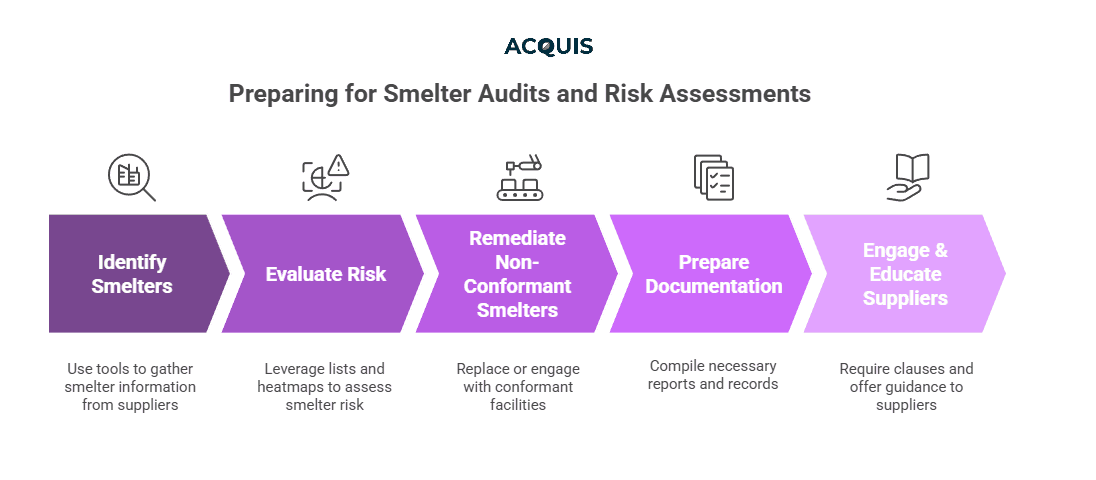
- Step 1: Identify Smelters in Your Supply Chain
Use tools like the Conflict Minerals Reporting Template (CMRT) or supply chain tracing software to gather smelter info from your Tier 1 and Tier 2 suppliers.
- Step 2: Evaluate Risk Using Public & Proprietary Lists
Leverage:
- RMI Conformant & Active Lists
- EU CAHRAs List
- Acquis’s Smelter Risk Heatmap (if using Acquis software)
- Step 3: Remediate Non-Conformant Smelters
- Replace high-risk smelters where possible
- Work with suppliers to engage conformant facilities
- Track and document all remediation efforts
- Step 4: Prepare Documentation
- Smelter audit reports
- Supplier declarations
- RCOI process records
- Due diligence policies and training logs
- Step 5: Engage & Educate Your Suppliers
- Require conflict minerals clauses in contracts
- Offer guidance on CMRT/EMRT completion
- Share risk findings and expectations
Technology’s Role in Simplifying Audits
Modern compliance platforms like Acquis automate risk flagging, smelter validation, supplier outreach, and document management.
Look for Tools That Offer:
- Pre-integrated RMI Smelter Lists
- CMRT/EMRT survey automation
- Custom dashboards and real-time analytics
- AI-assisted smelter validation
How Acquis Simplifies the Process
- Centralized CMRT & smelter data tracking
- Auto-flagging of high-risk smelters
- Built-in conformity status from RMI
- Dynamic reports for SEC filing and stakeholder updates
Bonus: Our expert team guides you on engagement strategy, risk prioritization, and supplier compliance.
Strengthen Your Conflict Minerals Compliance
Whether you're starting your first RCOI or optimizing a mature program, Acquis helps you:
- Ensure smelter transparency
- Reduce supplier risk
- Automate Form SD compliance
Schedule a Demo to streamline your conflict minerals due diligence.