






Table of Contents
France has officially become the first EU country to legislate a national ban on PFAS the “forever chemicals” that are now the focus of global regulatory crackdowns.
In February 2025, France adopted Law No. 2025-188, prohibiting PFAS in cosmetics, textiles, footwear, and ski waxes beginning 1 January 2026, with a complete textile phase-out by 2030. This makes France the European test case for PFAS enforcement, preceding the EU-wide restriction still under REACH review.
What’s Confirmed in the Law (100 % Verified)
- Law: Loi n° 2025-188 du 27 février 2025 — published on Legifrance.
- Effective 1 Jan 2026: Ban on placing PFAS-containing cosmetics, ski waxes, clothing textiles, footwear, and waterproofing agents on the French market.
- By 2030: Extension to all textile products, except those with approved essential-use or sovereignty exemptions.
- Temporary Exemptions: PPE under EU Regulation 2016/425 and defense/civil-security gear remain allowed until further notice.
- Objective: Protect consumers and reduce environmental PFAS exposure while preserving industrial continuity where no viable alternative exists.
- Consultation Period: Draft decrees open for public comment 7 Aug – 5 Sept 2025 via the French Ministry for Ecological Transition.
What’s in the Draft Decrees (Under Consultation)
> These technical details are drawn from draft implementing decrees released in August 2025. > Final values will be confirmed when the decrees are published on Legifrance later in 2025.
Proposed PFAS thresholds (draft):
- 25 ppb per targeted PFAS (non-polymers)
- 250 ppb total PFAS (including precursors)
- 50 ppm when PFAS polymers are involved
Proposed industrial discharge targets (draft):
- 70 % reduction in aqueous PFAS discharges by 2028 (using 2023 as baseline)
- “Near-zero” discharges by 2030
Draft economic measure:
- A proposed “polluter-pays” fee of approximately €100 per 100 g of PFAS released (referenced in Le Monde and industry consultations). This still awaits publication of its implementing decree.
Impact by Sector
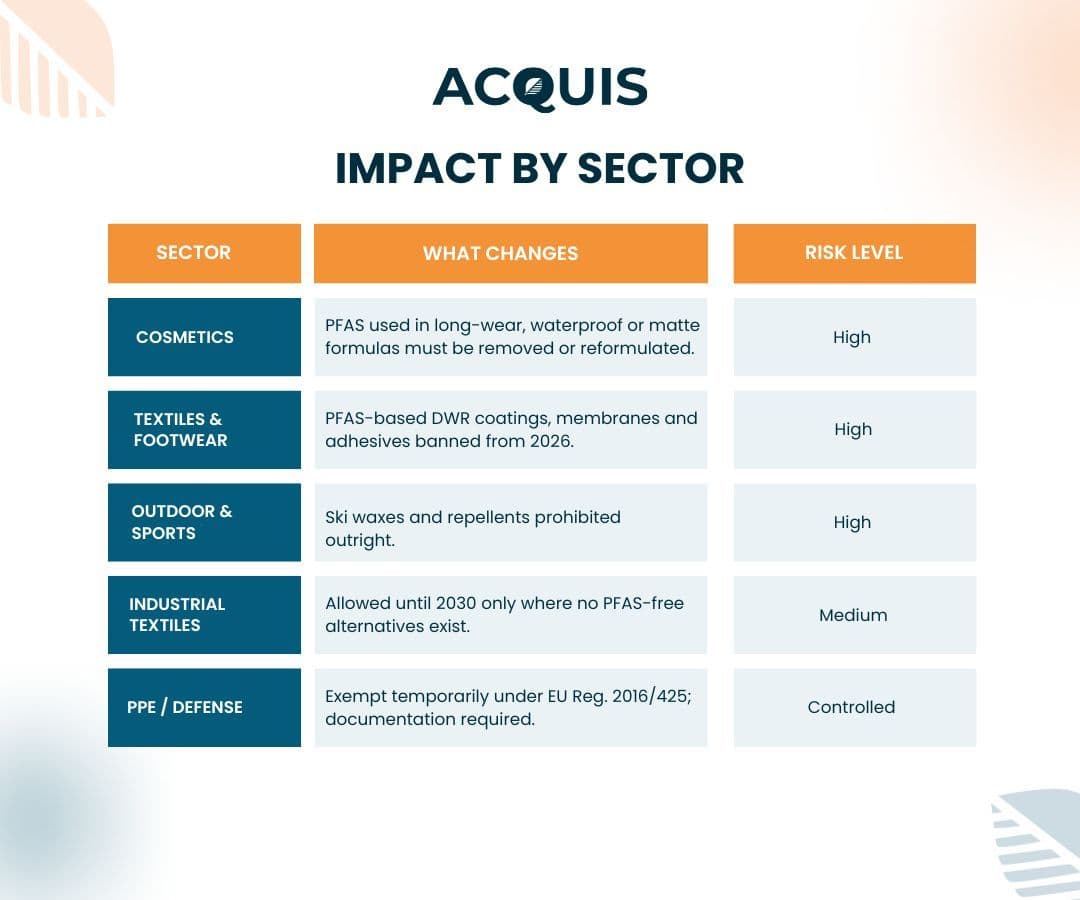
The trace-amount loophole is gone. Any article above draft limits (25 ppb / 250 ppb / 50 ppm) will be non-compliant once enforced.
How to Prepare Now
- Audit Your Portfolio – Identify SKUs that use PFAS-based coatings, surfactants, or additives.
- Test and Validate – Use accredited labs with limit of quantification ≤ 5 ppb; adopt provisional limits of 25 ppb (single) / 250 ppb (total) / 50 ppm (polymers).
- Engage Suppliers – Require PFAS-free declarations backed by analytical reports and change-notification clauses.
- Baseline Emissions – Measure 2023 PFAS discharges to support the 70 % reduction target for 2028.
- Document Exemptions – If you claim essential-use status, prepare alternatives assessments and sunset plans.
Take action now: Schedule a PFAS Compliance Diagnostic to benchmark your readiness.
Why This Matters Beyond France
France’s move is not isolated policy — it’s a preview of the EU’s next chapter. The French draft thresholds align closely with the EU REACH PFAS restriction proposal. Manufacturers meeting France’s standards today will already comply with likely EU requirements when they arrive (2027-2028).
Read next: EU PFAS Restriction Proposal – What’s Coming for Manufacturers
Final Note
France has locked the law — the numbers are coming. If you manufacture, import or sell consumer goods in the EU, treat France’s draft thresholds as your baseline and start testing now. By the time the final decrees arrive (late 2025), PFAS-free compliance won’t be a competitive edge — it’ll be a requirement.