






Table of Contents
If you're importing, exporting, or moving products cross-border—getting your codes wrong isn't a typo. It's a tariff, audit, or seizure waiting to happen.
Why HS and HTS Classification Matters
Every product you ship—whether it’s a wire harness, server, lab device, or battery pack—needs to be classified under the Harmonized System (HS) and Harmonized Tariff Schedule (HTS).
But here’s the issue: most teams still confuse the two, underestimate their impact, or rely on outdated spreadsheets that don’t stand up in customs inspections.
What Is the HS Code?
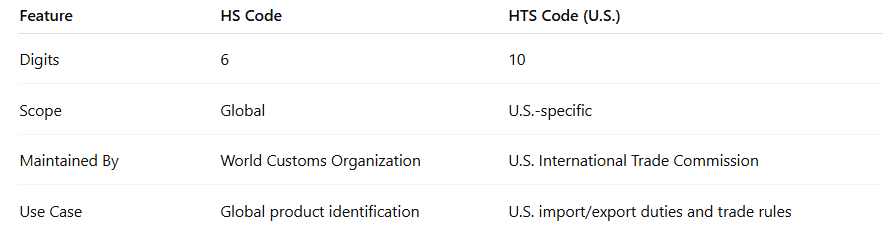
The Harmonized System (HS) is a 6-digit international product classification framework maintained by the World Customs Organization (WCO).
It’s used by 200+ countries to:
- Identify goods
- Apply duties and taxes
- Enforce import/export regulations
- Compile trade statistics
Example:
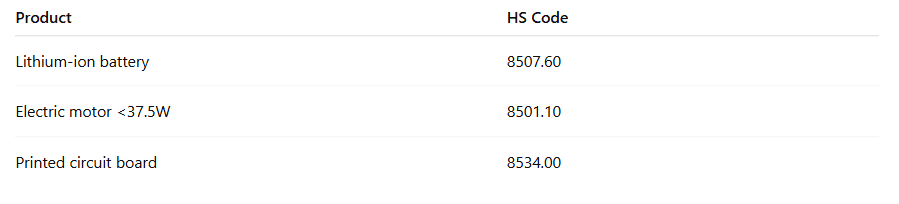
The first 6 digits are universal. After that, countries add their own specificity.
What Is the HTS Code (HTSUS)?
In the U.S., the HS code is extended to 10 digits to create the HTS code—short for Harmonized Tariff Schedule of the United States.
Managed by the U.S. International Trade Commission (USITC), the HTS code determines:
- Duty rates
- FTA eligibility (like USMCA)
- Trade remedy application (anti-dumping, countervailing duties)
Bottom line: HS = global standard, HTS = country-specific application.
Real-World Impact:
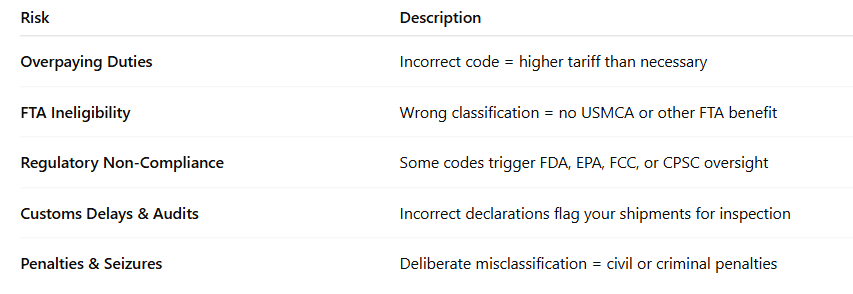
Incorrect HTS classification = wrong duty rate = fines, shipment delays, audits—or worse, legal penalties for misdeclaration.
Key Differences: HS vs. HTS
Common HS and HTS Classification Mistakes

How to Classify Your Products Accurately
1- Start With the Product’s Function and Material
What does it do? How is it used? What is it made of?
2- Use the General Rules of Interpretation (GRI)
GRIs govern how you interpret classifications when multiple options exist.
3- Check Cross-Border Consistency
Use the same 6-digit HS code globally, but validate HTS extensions per country.
4- Consult Explanatory Notes and Binding Rulings
For complex products, refer to:
- WCO Explanatory Notes
- U.S. CBP rulings database
5- Classify at the Lowest Unit Level
Classify components, not just the final assembly—especially for electronics, kits, and modular builds.
What’s at Stake?
Classification Is Not a One-Time Task
It’s a living compliance activity. If your:
- Product changes
- Material source changes
- Function evolves
- Country of destination changes…
…your HS/HTS code might need to change too.
How Acquis Helps You Get Classification Right
At Acquis, we don’t guess. We:
- Match parts and components to up-to-date HTS/HS datasets
- Flag country-specific classification rules
- Track classification changes over time
- Link classification to COO, ECCN, and FTA eligibility
One misclassification can cost you thousands. We make sure it doesn’t happen.
Talk to our classification experts →
If you don’t control your product classification—you don’t control your compliance costs.
HTS errors don’t just cost you money. They cost you contracts, trust, and time.
With Acquis, you get accuracy, traceability, and global classification consistency across your supply chain.
Let’s clean up your codes before customs does it for you.