






Table of Contents
- What Is the Extended Minerals Reporting Template (EMRT)? 2025 Edition
- What Are Extended Minerals?
- Why Is Extended Mineral Mining a Problem?
- What Is the EMRT?
- What’s New in EMRT v2.0?
- Major Additions to EMRT:
- EMRT vs. CMRT: What’s the Difference?
- Why Does EMRT Matter?
- What’s Inside the EMRT?
- What’s Coming Next?
- Use Cases for EMRT Today
- Automate Your EMRT Due Diligence?
What Is the Extended Minerals Reporting Template (EMRT)? 2025 Edition
In a world increasingly driven by supply chain transparency, the Extended Minerals Reporting Template (EMRT) has become an essential tool for responsible sourcing.
Developed by the Responsible Minerals Initiative (RMI), the EMRT consolidates cobalt, mica—and now copper, lithium, natural graphite, and nickel—into a single due diligence format. It helps companies trace extended minerals, identify high-risk sourcing from conflict-affected areas, and meet growing environmental, social, and governance (ESG) expectations.
Let’s break it down.
What Are Extended Minerals?
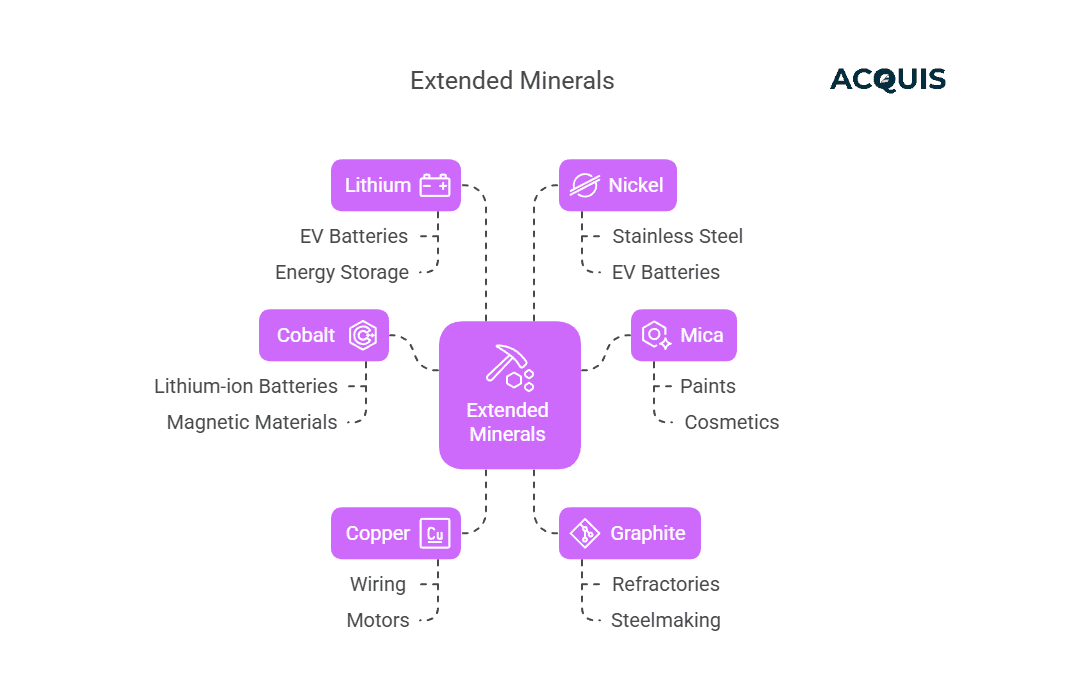
Extended minerals go beyond the classic “3TG” conflict minerals. These include:
- Cobalt – Critical for lithium-ion batteries
- Mica – Used in electronics, cosmetics, and paints
- Copper – Key conductor in electronics and EVs
- Natural Graphite – Crucial for steelmaking and energy storage
- Lithium – Powers EVs, phones, and energy grids
- Nickel – Found in stainless steel, batteries, and coins
These minerals are indispensable to modern technology—and frequently linked to child labor, modern slavery, and unsafe mining practices in conflict-affected and high-risk areas (CAHRAs).
Why Is Extended Mineral Mining a Problem?
Sourced from CAHRAs
Conflict-affected and high-risk areas (CAHRAs) are often controlled by armed groups and lack adequate labor protections. Mining in these zones perpetuates:
- Child labor (particularly in mica mines in India, Madagascar)
- Forced labor (notably in DRC’s cobalt mines)
- Unsafe working conditions
- Environmental degradation
Example: Cobalt in the DRC
- Over 70% of cobalt comes from the Democratic Republic of Congo. In the absence of safeguards:
- Workers (often children) are forced into toxic, hand-dug pits
- Lung damage, injuries, and fatalities are common
- Water and air pollution affect local communities
Limited Regulation, High ESG Risk
Currently, there’s no regulatory framework requiring companies to trace or report extended minerals. But stakeholder pressure—from investors, NGOs, and consumers—is pushing organizations to act now.
What Is the EMRT?
The Extended Minerals Reporting Template (EMRT) is a standardized Excel-based tool that:
- Tracks the use of cobalt, mica, copper, lithium, graphite, and nickel
- Identifies refiners and processors
- Flags high-risk sourcing from CAHRAs
- Collects supplier-level due diligence info
- Aligns with the OECD Due Diligence Guidance
Current Version: EMRT v2.0** (released April 2025)

What’s New in EMRT v2.0?
RMI expanded the scope to support EU Battery Regulation compliance and ESG reporting needs.
Major Additions to EMRT:
- 4 New Minerals**: Copper, Graphite (natural), Lithium, Nickel
- Mine List Tab: Optional mine-level transparency
- Updated Smelter & Processor Lists
This version merges the former Cobalt Reporting Template (CRT) and Mica Reporting Template (MRT)—and goes further.
EMRT vs. CMRT: What’s the Difference?
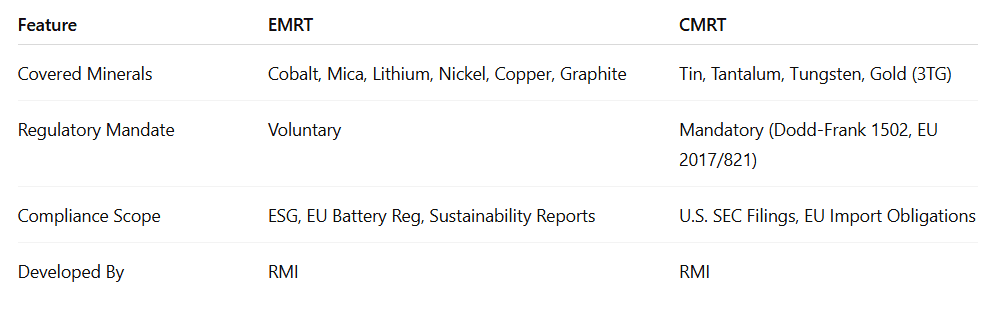
While CMRT supports legal reporting for conflict minerals, EMRT is the new ESG backbone for companies sourcing high-risk battery and electronics materials.
Why Does EMRT Matter?
Extended minerals are:
- Everywhere – Found in phones, EVs, laptops, medical devices
- Often unregulated – No direct government mandates (yet)
- Ethically volatile – Major sourcing from CAHRAs
Companies can no longer say, “We didn’t know.” With EMRT, they don’t have to.
What’s Inside the EMRT?
The template includes:
- Supplier survey questions (use, CAHRA sourcing, recycled content)
- List of known cobalt and mica refiners/processors
- Mine origin questions
- Optional XML schema (digital submission)
Companies send EMRT to their suppliers, gather data, identify risk, and close gaps in sourcing.
What’s Coming Next?
With the rise of:
- EU Battery Passports
- Digital Product Passport frameworks
- Mandatory ESG disclosure (CSRD, SEC ESG)
EMRT may become as essential as CMRT. Many expect copper, lithium, and nickel due diligence to be legally required within the next 2–3 years.
Use Cases for EMRT Today
- Investor ESG Reporting
- EU Battery Regulation Supplier Surveys
- Supply Chain Risk Screening
- Forced Labor & CAHRA Screening
Automate Your EMRT Due Diligence?
Manual outreach and spreadsheet chaos won’t cut it anymore.
- Automatically identify in-scope suppliers
- Send EMRT requests at scale
- Validate responses using AI + compliance rules
- Map refiners and CAHRAs
- Generate audit-ready reporting packages
Book a Live Demo to future-proof your extended minerals reporting process.
Don’t wait for laws to change. Use EMRT to lead on transparency. Extended minerals matter. Make your sourcing strategy match the moment.