






Table of Contents
- What is EN IEC 63000:2018?
- Evolution of RoHS Documentation Standards
- Key Objectives of EN IEC 63000:2018
- What Are RoHS Exemptions — And Why Do They Matter?
- How to Implement EN IEC 63000:2018 in Your Compliance Process
- 1. Identify Restricted Substances in Your Product
- 2. Collect Supplier Declarations and Testing Reports
- 3. Conduct Internal Risk Assessments
- 4. Maintain a Well-Structured RoHS Technical File
- 5. Update Your RoHS Declaration of Conformity (DoC)
- Why Compliance with EN IEC 63000:2018 Matters
- Final Thoughts
In today’s regulatory landscape, compliance with hazardous substance restrictions is crucial for manufacturers of electrical and electronic equipment (EEE). The European Union’s Restriction of Hazardous Substances (RoHS) Directive (2011/65/EU) mandates that all EEE products meet strict environmental standards. To support this, the EN IEC 63000:2018 standard provides a framework for creating technical documentation that demonstrates RoHS compliance.
What is EN IEC 63000:2018?
EN IEC 63000:2018 is a harmonized standard that defines the technical documentation manufacturers must compile to ensure their products comply with substance restriction regulations like RoHS 2. It eliminates the need for costly chemical testing by offering a structured, documentary approach to compliance verification.
Evolution of RoHS Documentation Standards
- EN 50581:2012 – The first EU standard for RoHS technical documentation, developed by CENELEC.
- IEC 63000:2016 – A global version of EN 50581 with a broader international scope.
- EN IEC 63000:2018 – The latest update, officially replacing EN 50581:2012 on November 18, 2021, under Decision (EU) 2020/659.
- November 22, 2024 – The European Commission proposed a future review of EN IEC 63000:2018 to better align with Decision No. 768/2008/EC regarding internal production control.

Strong technical documentation processes become easier to manage with RoHS compliance software that supports evidence collection, declaration review, and audit readiness.
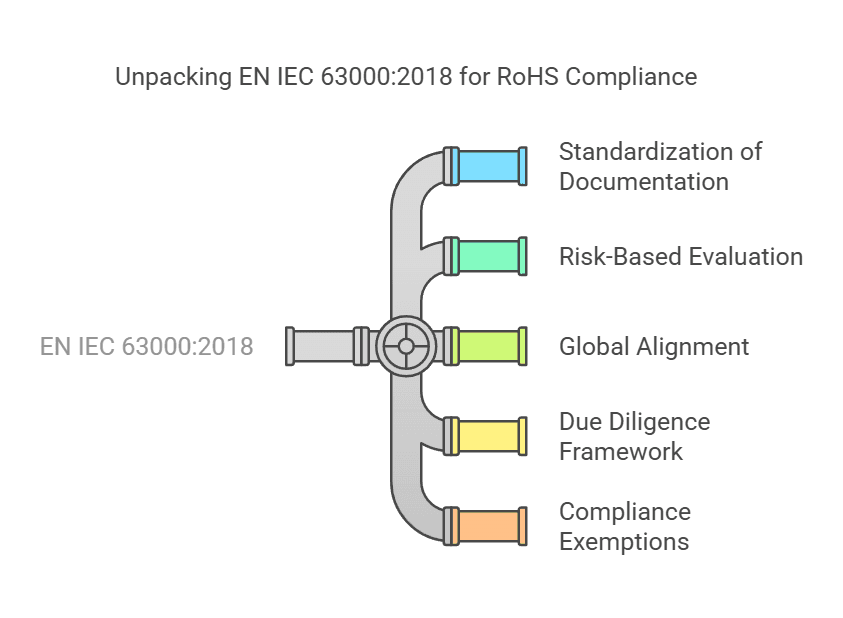
Key Objectives of EN IEC 63000:2018
- Standardizes the technical documentation process for RoHS compliance.
- Establishes a risk-based approach to evaluating hazardous substances.
- Aligns with global environmental regulations beyond just EU RoHS.
- Provides a due diligence framework to assess suppliers and materials.
- Incorporates the latest application-specific RoHS exemptions, including the limited exemption for cadmium and lead in recovered rigid PVC from closed-loop recycling systems, introduced under Directive (EU) 2024/232 and valid until May 28, 2028, subject to strict material traceability and documentation requirements.
While EN IEC 63000:2018 provides a framework for technical documentation, it's essential to understand the role of RoHS exemptions. These exemptions allow for the temporary use of certain hazardous substances in specific applications where alternatives are not yet feasible.
What Are RoHS Exemptions — And Why Do They Matter?
While the RoHS Directive restricts the use of specific hazardous substances in electrical and electronic equipment, certain uses are temporarily allowed under what are known as RoHS exemptions. These exemptions are granted when eliminating a substance is technically or scientifically infeasible — for example, when no viable alternatives exist for a critical function.
Commonly exempted substances include lead in high-reliability solders, hexavalent chromium in surface treatments, or cadmium in optical components. Each exemption applies to specific use cases and carries a defined validity period, after which it may expire or be reviewed for renewal.
> Manufacturers relying on exemptions must document them clearly in the Technical File and monitor expiration timelines to remain compliant.
In 2025, the European Commission adopted new delegated directives restructuring several long-standing lead exemptions under RoHS, including Series 6 (lead in alloys), 7a (high-melting-point solders), and 7c (lead in glass and ceramics).
While these changes do not modify the requirements of EN IEC 63000:2018 itself, they significantly affect what must be documented in the RoHS Technical File — particularly exemption scope, validity periods, and product-specific applicability.
Manufacturers relying on lead exemptions must ensure their technical documentation reflects the new exemption structure and sunset dates.
Need a RoHS documentation checklist? Get the eBook.
How to Implement EN IEC 63000:2018 in Your Compliance Process
To meet RoHS compliance requirements efficiently, manufacturers must structure their RoHS technical files using the EN IEC 63000:2018 framework. Here’s a step-by-step approach:
1. Identify Restricted Substances in Your Product
List all materials and components used in your product and ensure they do not contain RoHS-restricted substances like Lead, Mercury, and Cadmium.
2. Collect Supplier Declarations and Testing Reports
Obtain Material Declarations (MDs) and Certificates of Compliance (CoC) from suppliers.
3. Conduct Internal Risk Assessments
Define a risk-based approach to verify compliance and maintain a due diligence process
4. Maintain a Well-Structured RoHS Technical File
Ensure the documentation includes:
- Product Information (name, model, category, manufacturer details)
- Material and Substance Declarations
- Supplier Certificates and Compliance Declarations
- Compliance Verification Process Details
- Declaration of Conformity (DoC)
5. Update Your RoHS Declaration of Conformity (DoC)
Since EN IEC 63000:2018 is the recognised harmonised standard, manufacturers should update their Declarations of Conformity to reference:
- Directive 2011/65/EU (RoHS 2)
- Commission Delegated Directive (EU) 2015/863 (phthalates)
- EN IEC 63000:2018 as the technical documentation standard
References to EN 50581:2012 should be fully removed from active DoCs.

Why Compliance with EN IEC 63000:2018 Matters
Failure to comply with EN IEC 63000:2018 can result in:
- Market access restrictions in the EU and other RoHS-enforcing regions.
- Costly recalls and penalties due to non-compliance.
- Reputational damage and loss of consumer trust.
- Potential future amendments—The European Commission has proposed reviewing the standard to ensure alignment with broader internal production control requirements.
By adopting this standard, manufacturers can streamline compliance, reduce testing costs, and enhance trust with regulators and customers.
With the European Commission signalling further alignment of harmonised standards with internal production control requirements, maintaining up-to-date, risk-based technical documentation under EN IEC 63000 is expected to become even more critical in future market surveillance actions.
Download The Complete Guide to ROHS Compliance for a clear roadmap on technical documentation, compliance strategies, and best practices to stay ahead of evolving regulations.
Final Thoughts
As regulations evolve, staying compliant with RoHS 2 and EN IEC 63000:2018 is not just a legal requirement but a strategic business advantage. Implementing a structured compliance framework will help manufacturers navigate the complexities of hazardous substance restrictions efficiently.
Would you like expert guidance on RoHS compliance and streamlining your sustainability initiatives?
Contact us today to ensure your technical documentation meets EN IEC 63000:2018 standards seamlessly!