






Table of Contents
India is taking strong steps to tackle electronic waste and toxic substances — and if you're manufacturing or importing Electrical and Electronic Equipment (EEE), the E-Waste (Management) Rules apply to you.
India RoHS, part of these rules, is not optional. It's enforceable. It's evolving. And it's stricter than ever.
What is India RoHS?
India RoHS (Restriction of Hazardous Substances) was introduced under the E-Waste (Management) Rules, 2011, with RoHS obligations becoming enforceable from May 12, 2013. These rules were updated through:
- E-Waste (Management) Rules, 2022
- Second Amendment, 2023, issued by the Ministry of Environment, Forest, and Climate Change (MoEFCC)
India RoHS regulates the use of hazardous substances in EEE, aiming to reduce environmental impact and improve public health.
What Substances Are Restricted in India RoHS?
Manufacturers must limit the following substances in homogeneous materials within EEE:
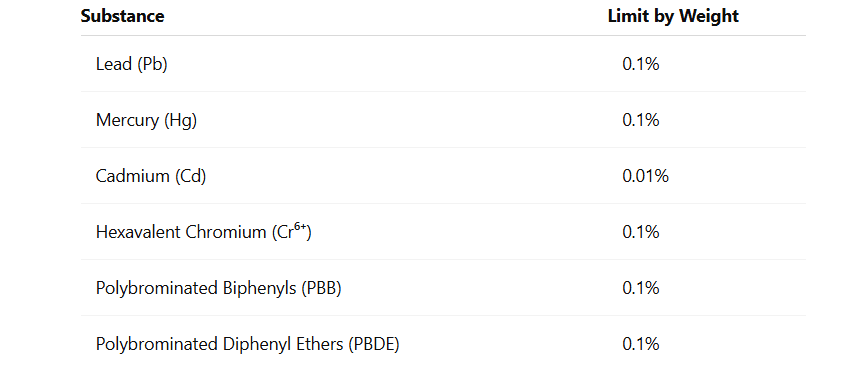
> ⚠️ Note: India does not yet restrict the 4 phthalates (BBP, DBP, DEHP, DIBP) covered by EU RoHS.
Regulatory amendments are easier to track with RoHS compliance software that helps maintain updated exemption and compliance records.
Scope of India RoHS (Post-2023 Amendment)
India’s scope is expanding, and aligning more closely with the EU. As of the 2023 amendment, the following categories are regulated:
- IT and Telecom Equipment
- Consumer Electronics (TVs, Audio, PV Panels)
- Large and Small Household Appliances
- Electrical and Electronic Tools
- Toys, Leisure, and Sports Equipment
- Medical Devices (except implanted/infected)
- Laboratory Instruments
> Products that do not rely on electricity or are used as sub-assemblies may be out of scope. MSMEs are also currently exempt.
Key Differences: India RoHS vs EU RoHS
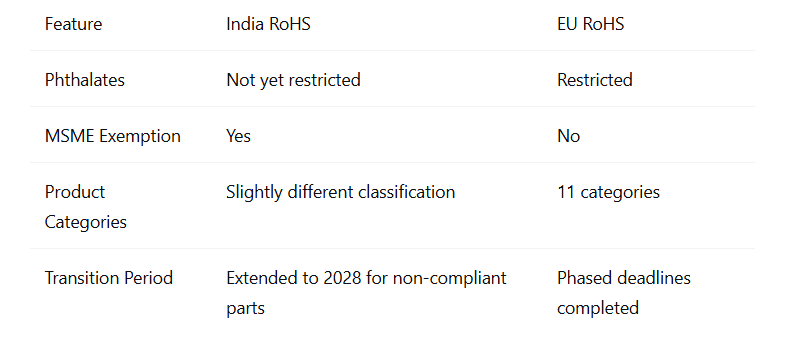
> 📌 Implementation flexibility exists in India, but enforcement is increasing — especially post-2025.
India RoHS Documentation & Responsibilities
Obligated Parties:
- Producers (including manufacturers and importers)
- Distributors
- Recyclers and Dismantlers (under WEEE)
Required Actions:
- Maintain technical documentation per IEC 63000
- File a Declaration of Conformity (DoC)
- Register with CPCB (Central Pollution Control Board)
- Ensure labeling and substance tracking for compliance
India RoHS Transition & Enforcement Timeline
- WEEE rules effective: May 1, 2012
- RoHS rules enforced: May 12, 2013
- New product categories and scope: 2023 onward
- Grace period for non-compliant parts: Until April 1, 2028
Penalties apply for non-compliance — including product recalls, fines, and import/export blocks.
Why India RoHS Matters
India is the third-largest e-waste generator globally. RoHS compliance is not just a legal obligation — it’s a sustainability and business imperative.
- Stay compliant and avoid penalties
- Access Indian markets without disruption
- Strengthen ESG commitments
Simplify India RoHS With Acquis
Acquis streamlines RoHS compliance with automated data collection, supplier engagement, and technical documentation tools.
- Centralize substance declarations
- Identify risks across your supply chain
- Prepare RoHS-ready documentation
- Track exemptions and deadlines
Get a walkthrough of India RoHS compliance tools and stay ahead of regulatory risk.