






Table of Contents
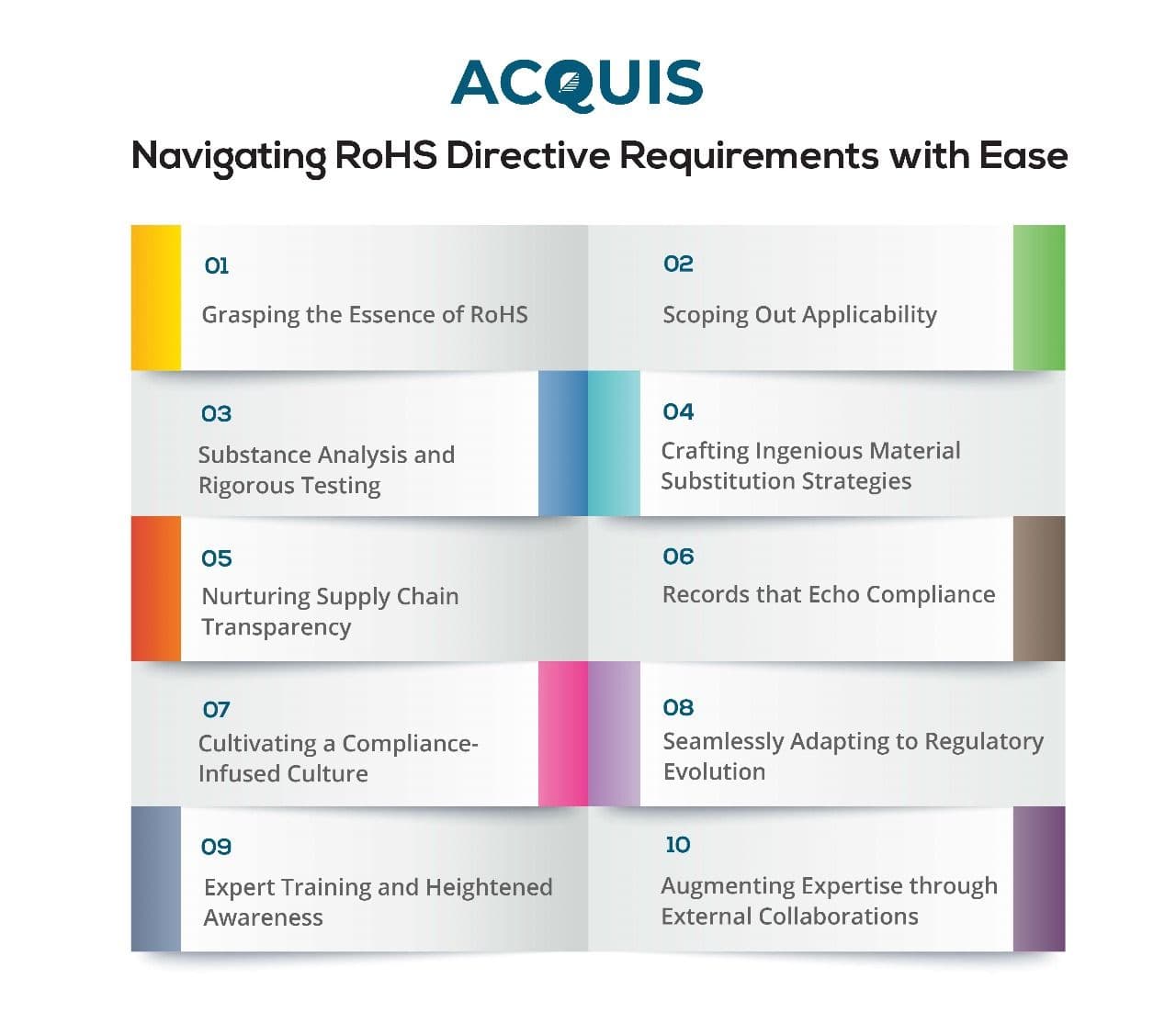
- Grasping the Essence of RoHS
- Scoping Out Applicability
- Substance Analysis and Rigorous Testing
- Crafting Ingenious Material Substitution Strategies
- Nurturing Supply Chain Transparency
- Records that Echo Compliance
- Cultivating a Compliance-Infused Culture
- Seamlessly Adapting to Regulatory Evolution
- Expert Training and Heightened Awareness
- Augmenting Expertise through External Collaborations
- How We Acquis help you achieve RoHS Compliance
In the fast-evolving landscape of regulatory compliance, few roles are as vital as that of a compliance engineer. Among the myriad of regulations demanding attention, the Restriction of Hazardous Substances (RoHS) directive holds a prominent place within the realm of electrical and electronic equipment (EEE). In this comprehensive guide tailored exclusively for compliance engineers, we delve into the intricacies of RoHS compliance. From a deep understanding of the directive's core principles to the implementation of expert strategies, this article equips compliance engineers with the tools and insights needed to navigate RoHS requirements.
Grasping the Essence of RoHS
The bedrock of a successful compliance strategy lies in comprehending the core principles of the RoHS directive. At its heart, RoHS is designed to mitigate the risks posed by hazardous substances in EEE to both human health and the environment. The directive homes in on six specific hazardous substances: lead (Pb), mercury (Hg), cadmium (Cd), hexavalent chromium (Cr6+), polybrominated biphenyls (PBBs), and polybrominated diphenyl ethers (PBDEs). Understanding these substances and their potential impacts is fundamental.
Complex compliance obligations are easier to handle with RoHS compliance software built for supplier data collection, review, and ongoing monitoring.
Scoping Out Applicability
The starting point of any RoHS compliance effort is to accurately define the scope of applicability. Compliance engineers must meticulously identify EEE products that fall under the RoHS directive. This classification process Extends to a wide range of products, from everyday consumer electronics to intricate medical devices and complex industrial machinery. Defining the precise boundaries of applicability sets the stage for targeted and effective compliance strategies.
Substance Analysis and Rigorous Testing
A cornerstone of compliance engineering lies in substance analysis and rigorous testing. Collaboration with suppliers is imperative to gather comprehensive and accurate information about material compositions. Employing advanced testing methodologies—whether in-house or through accredited third-party laboratories—ensures the absence of restricted substances beyond permissible thresholds. This step is critical to validate compliance and build consumer trust.
Crafting Ingenious Material Substitution Strategies
A compliance engineer's role extends beyond verification to strategic action. Collaborating seamlessly with design and engineering teams, compliance engineers play a pivotal role in identifying suitable, RoHS-compliant alternatives. The delicate balance between functionality, cost-effectiveness, and reduced environmental impact defines the success of material substitution strategies. A mastery of this process often results in improved product performance while adhering to regulatory mandates.
Nurturing Supply Chain Transparency
Effective communication within the supply chain is a hallmark of successful compliance. Compliance engineers act as orchestrators of transparent dialogues with suppliers, where discussions revolve around material compositions and their implications. Establishing a robust flow of updates and ensuring clear communication channels are essential steps in fostering a proactive culture of compliance that transcends organizational boundaries.
Records that Echo Compliance
In the intricate tapestry of compliance engineering, meticulous documentation serves as the thread that weaves together regulatory adherence. Methodically maintaining records encompassing substance tests, supplier interactions, and compliance evaluations is crucial. These records transform into a comprehensive compliance trail, serving as indispensable documentation during audits or inquiries, while also portraying the dedication to regulatory diligence.
Cultivating a Compliance-Infused Culture
Beyond tasks and processes, compliance engineering involves cultivating a culture that values adherence. Collaboration with cross-functional teams aids in crafting internal processes that ensure unwavering adherence to RoHS mandates. Regular reviews and proactive recalibrations form the backbone of a sustainable culture of compliance, echoing your dedication to upholding industry standards.
Seamlessly Adapting to Regulatory Evolution
In the dynamic landscape of regulations, compliance engineers stand as sentinels of change. The ability to navigate shifts in regulatory frameworks and effectively disseminate updates is integral. This flexibility showcases the commitment to maintaining compliance, adapting to evolving industry standards, and ensuring that products remain on the right side of regulations.
Expert Training and Heightened Awareness
A knowledgeable team is an empowered one. Compliance engineers orchestrate tailored training sessions, imparting the Shades of RoHS to stakeholders involved in design, manufacturing, and the supply chain. This educational effort fosters a sense of ownership in upholding compliance integrity and instills a proactive stance towards regulatory adherence.
Augmenting Expertise through External Collaborations
Navigating the complicated journey of RoHS compliance often requires external expertise. Partnering with environmental consultants, regulatory experts, or peers well-versed in the RoHS landscape augments your compliance engineering finesse. Their insights bridge gaps, expedite solutions and offer fresh perspectives on intricate compliance conundrums.
How We Acquis help you achieve RoHS Compliance
In the intricate landscape of regulatory compliance, where adherence to the Restriction of Hazardous Substances (RoHS) directive is a pivotal concern, streamlining your compliance effort is paramount. At Acquis, we offer a comprehensive suite of software and services designed to simplify, automate, and elevate your RoHS compliance journey. From seamless data management and supply chain monitoring to tailored compliance strategies, our offerings empower you to navigate RoHS with precision at just a click of a button. Book a demo