






Table of Contents
The electronics sector is one of the largest industrial users of PFAS—and now, it’s one of the most heavily scrutinized. As global regulators tighten the screws, manufacturers must act fast to navigate a future where PFAS bans are no longer theoretical—they're already happening.
How PFAS Are Used in Electronics
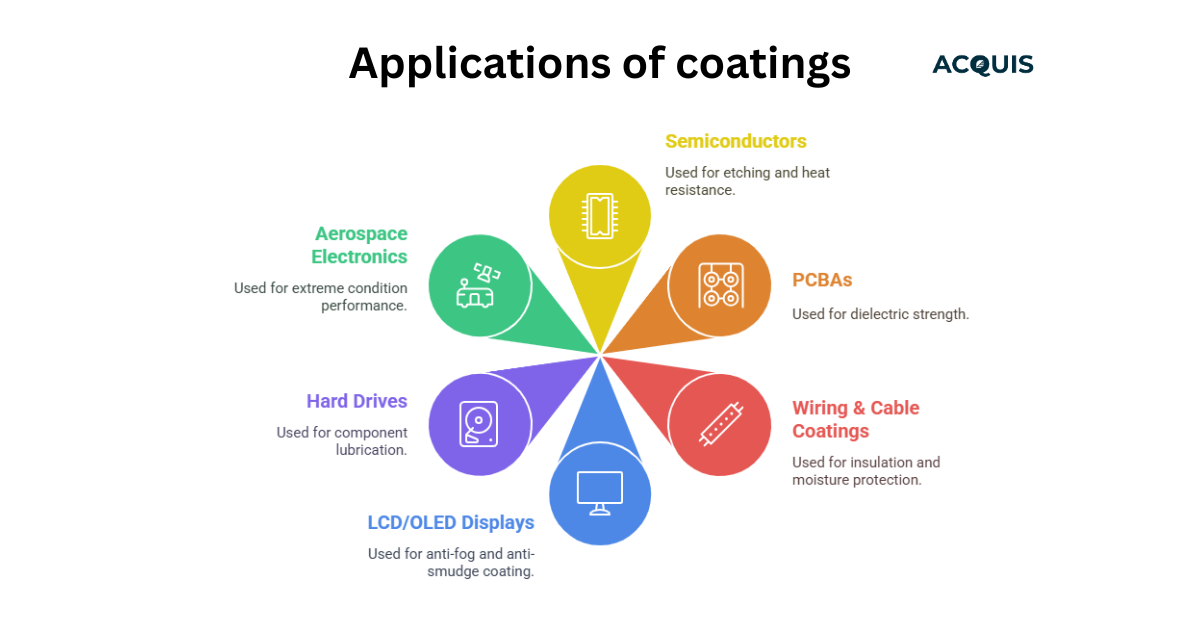
Per- and Polyfluoroalkyl Substances (PFAS) offer unmatched durability, chemical resistance, and thermal stability. These traits make them indispensable in:
- Semiconductors – for etching and heat resistance
- Printed Circuit Board Assemblies (PCBAs) – for dielectric strength
- Wiring & Cable Coatings– for insulation and moisture protection
- LCD/OLED Displays– for anti-fog, anti-smudge coating
- Hard Drives – for component lubrication
- Aerospace Electronics – for extreme condition performance !ACQUIS (4).png
The EU estimates that the electronics sector consumes over 4,400 metric tons of PFAS annually. That number could spike tenfold in the coming decades if left unchecked.
Why Electronics Rely on PFAS—and Why That’s a Problem
PFAS chemicals remain in use due to their unique properties:
- Chemical and thermal stability
- Hydrophobic and oleophobic surfaces
- Low friction and non-stick capabilities
- High dielectric insulation
But these very traits make PFAS environmentally persistent. Their carbon-fluorine bonds resist degradation, meaning they accumulate in the environment and in humans—causing cancer, liver damage, immune dysfunction, and reproductive issues.
The Global PFAS Crackdown in 2025
United States
TSCA Section 8(a)(7): Mandatory PFAS reporting by April 13, 2026. For Small manufacturers/importers, including articles as defined in the regulation, have an additional extension and must submit data by April 13, 2027.
EPA Watchlist: PFOA, PFOS, and others prioritized for restriction.
Maine’s PFAS Law: Ban on intentionally added PFAS in most products by 2030.
European Union
REACH Restriction Proposal: A near-total PFAS ban, with carve-outs only for “essential uses.”
Annex XVII (Entry 65): C9-C14 PFCA restrictions already in place.
POPs Regulation: PFOA, PFOS, PFHxS restricted to 25 ppb.
Canada
CEPA Section 71 Reporting Rule: Mandatory PFAS reporting for manufacturers and importers by March 24, 2025.
Long-Chain PFAS Ban Proposal: Restrictions for persistent, bio accumulative PFAS chemicals under review.
How to Verify PFAS in Your Supply Chain
- Audit BOMs and Declarations: Start with PCBs, coatings, wires, adhesives.
- Engage Tier 1 and Tier 2 Suppliers: Request Full Material Declarations (FMDs), Safety Data Sheets, or test reports.
- Conduct Analytical Testing: Where supplier data is vague or unavailable, use LC-MS/MS for quantification.
- Classify Data by Regulation: Map chemicals against REACH, TSCA, CEPA lists.
What’s at Stake for PFAS Non-Compliance
- Regulatory Fines: Up to $500,000 under CEPA for first-time violations.
- Product Bans: Especially under Maine and EU PFAS restrictions.
- Brand Damage: Being listed as a PFAS violator can trigger customer loss and ESG scrutiny.
- Lost Contracts: OEMs are increasingly demanding PFAS transparency and alternatives.
PFAS Compliance Strategy: From Risk to Readiness
- Map known and unknown PFAS across your entire product portfolio.
- Leverage Compliance Automation tools for material tracking and declaration collection.
- Track Exemptions and Use Thresholds for C9-C14 PFCAs, LC-PFAS, etc.
- Prepare for Total Ban Scenarios under REACH and Maine PFAS laws.
- Engage Legal & Technical Teams early to interpret applicability and prepare defensible positions.
Need help staying PFAS compliant?
Acquis offers PFAS screening tools, supplier declaration automation, and regulation-mapped dashboards for electronics companies navigating global compliance.